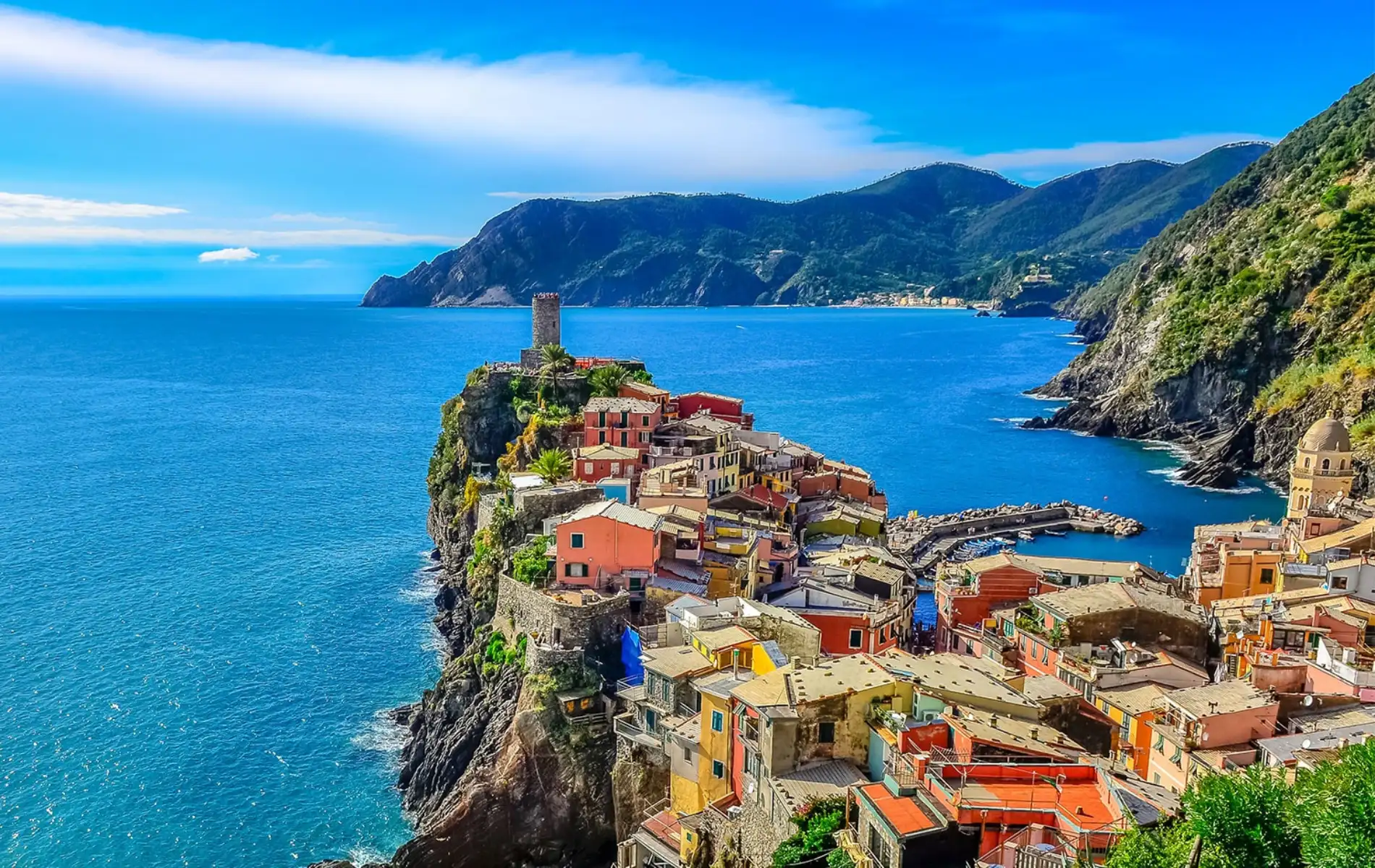
Mediterranean cruises: itineraries, ports and how much time you will have in each
Western versus eastern Mediterranean, the real time at each call (dock or tender) and how to build a sensible pace for traveling with friends or older adults.

I have cruised the Mediterranean with friends and also with my parents, and the conclusion is the same in both cases: the map lies. A route that looks perfect on paper can leave you five useful hours in a city that would need three days. What matters is not the list of ports but how much real time you have in each and how you reach the center.
This guide compares the two main regions, explains what changes between docking and tendering, and proposes a criterion for choosing the pace. Before deciding the route, see our guide to choosing the ideal destination and the one on when to travel. All times are approximate: each specific itinerary has its own schedule.
Two different Mediterraneans
The Mediterranean is often spoken of as one region, but a western and an eastern itinerary are very different experiences. This table summarizes the differences:
| Aspect | Western | Eastern |
|---|---|---|
| Typical ports | Barcelona, Marseille, Genoa, Rome, Naples | Athens, Greek islands, Croatia, Kotor, Venice |
| Profile | Big cities, history, food | Islands, white villages, walled cities |
| Port-to-center distance | Variable; sometimes far from the main city | Variable; some calls by tender |
| Pace | More urban with long walks | More contemplative, with climbs and stairs |
| Best for | Those who want to see lots of iconic cities | Those who prioritize scenery and calm |
Western Mediterranean: Rome, Barcelona and Naples
It is the choice for urban culture and food. The big drawback is that several of its most famous cities are not at the port. Rome, for example, is visited from a port more than an hour away, which noticeably shrinks useful time in the city. Naples works as a base for excursions to other areas, which means choosing between the city and its surroundings.
Barcelona, by contrast, has a port very close to the center, and you can do it almost on foot or with a short transfer. If your priority is making the most of your time, that difference weighs more than the name of the city.
Eastern Mediterranean: Greek islands and Croatia
Here the appeal is scenery and historic towns: islands, walls and sea views. Calls are usually shorter in extent but with more slopes and stairs. It is an attractive option if you prefer a calmer pace, although it calls for comfortable shoes and attention to the group mobility.
Docking or tendering: why it matters so much
In some ports the ship ties up at the pier and you walk down a gangway. In others it anchors in the bay and passengers go ashore on tender boats. This heavily affects useful time:
- At the pier: you disembark whenever you like and return with more flexibility.
- By tender: there are queues to get off and back on, and each trip takes time; several useful hours are lost.
- If the sea is rough, tender landings can be delayed or suspended.
- For older adults or people with reduced mobility, boarding a tender can be harder than a gangway.
How to calculate real time ashore
Take the length of the call and subtract the time to disembark, the transfer to the center, the return with a safety cushion and the queue to get back on. This is an illustrative example to understand the math:
| Item | Call with pier | Call with tender |
|---|---|---|
| Total length of the call | 9 h | 9 h |
| Disembarking and queue | 0.5 h | 1.5 h |
| Round trip to the center | 1.5 h | 1.5 h |
| Safety cushion before return | 1 h | 1 h |
| Useful time | 6 h | 5 h |
Call time: what the brochure does not say
Itineraries show arrival and departure times, but not how much useful time you will have. Some ports are far from the city that gives the call its name, and long excursions can eat almost the whole day. To organize your calls, see our guide to shore excursions, where I explain how to choose between going on your own or with the cruise line.
How to choose the pace for your group
- With friends: you can combine intense city calls with rest and sea days, and share planning tasks.
- With older adults: choose itineraries with few tender calls, docks close to the center and sea days between demanding calls.
- Short on time: prioritize one or two cities and leave the rest for wandering.
- On a tight budget: comparing the cost of going on your own with the cruise line can save a lot.
Practical guidelines
- Choose a maximum of one demanding call per day.
- Book limited-capacity visits in advance.
- Bring comfortable shoes and sun protection.
- Always leave a wide margin to get back to the ship.
- Alternate intense days with calm ones.
A seven-night itinerary: an example to organize ideas
This is an illustrative outline to see how to spread the effort. It does not correspond to a specific sailing:
| Day | Activity | Effort level |
|---|---|---|
| 1 | Embarkation at a western port | Low |
| 2 | Call in a big city | High |
| 3 | Sea day | Very low |
| 4 | Call with tender | Medium |
| 5 | Island call | Medium to high |
| 6 | Short call and a stroll | Low to medium |
| 7 | Sea day and disembarkation next day | Low |
Frequently asked questions
Which is better: western or eastern Mediterranean?
It depends on what you want. The western offers big cities and food; the eastern, islands and scenery at a calmer pace.
How many hours do I usually get at each port?
Calls usually last eight to ten hours, but useful time depends on the distance to the center and whether the ship docks or tenders.
What is a tender port?
A port where the ship cannot dock and passengers go ashore in small boats. It takes more time and depends on sea conditions.
Is it a good destination for traveling with older adults?
Yes, if you choose the itinerary well: few tender calls, nearby docks and a moderate pace.
Written by
Alexander Moe
Maritime travel consultant for exploration and river routes
Alexander is a maritime travel consultant who analyzes cruise lines, cruise types and exploration and river routes. His guides focus on comparing options with a clear head and avoiding surprises on board.
Meet the editorial team