Mandatory documentation and boarding requirements
Passport, visas, permission for minors, vaccines and online check-in: the complete list to arrive at the port with everything in order and board without trouble.
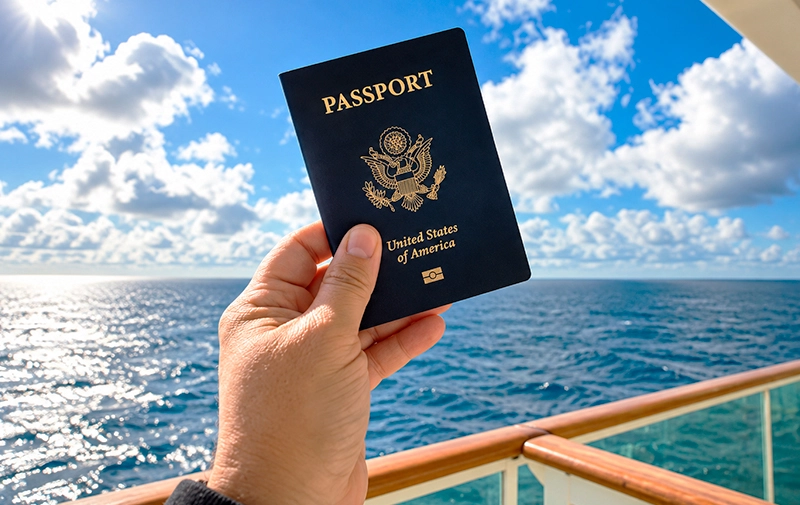
Documentation is the most common reason a passenger cannot board, and also the most avoidable. An expired passport, a misspelled surname on the booking or a missing permission for a minor can ruin a trip you have been preparing for months.
This guide gathers what to check before leaving: which ID you need, how to verify visas and vaccines, what applies to minors, when to complete online check-in and what to carry on you on embarkation day. Requirements depend on your nationality, the itinerary and the cruise line, so always confirm them with official sources.
Identity document: passport and alternatives
On an international cruise the norm is to travel with a passport, because the ports you visit may require it to enter the country. Some closed-loop routes, which leave from and return to the same port or region, may accept other documents depending on your nationality, but this depends on the rules of the departure country and the destinations.
Even if your itinerary allows another document, the passport is the safest option: if something unexpected happens en route, such as a medical emergency in another country, having it avoids problems. If in doubt, ask the cruise line and the relevant consulate.
Passport validity
Many countries and cruise lines require the passport to be valid for at least six months from the end date of the trip. It is not a universal rule, but it is very widespread and the safest to comply with. Check the expiry date as soon as possible, because renewing a passport can take weeks.
The name must match
The first name and surname on the booking must be exactly those on your passport, in the same order and spelling. A mistake on the booking can require corrections, sometimes at a cost, or prevent boarding. Check the details as soon as you confirm the booking.
Vaccines and health requirements
Health requirements change by region and date. Some destinations require a yellow fever vaccination certificate if you come from certain countries or if the itinerary includes risk areas, and others may ask for other vaccines or health declarations.
Check with your doctor or international vaccination center and with the consulates of the countries you will visit. If you need regular medication, bring the prescription and keep it in its original packaging in your carry-on.
Minors
All passengers, including babies, need their own travel document. In addition, there are extra requirements for minors:
- Traveling with both parents or guardians: their travel documents are normally enough, and it helps to carry the family record or birth certificate to prove the relationship.
- Traveling with one parent: a written permission from the other parent, sometimes notarized, is usually recommended or required.
- Traveling with neither parent: a notarized permission signed by both parents or guardians is required, plus the contact details of the responsible adult.
- In special situations, such as custody or guardianship, bring the legal documentation proving it.
Minimum age for babies
Check your cruise line minimum boarding age, which is usually six months and, on some long crossings, twelve. If the baby does not reach the minimum on the embarkation date, they cannot board.
Online check-in and boarding documents
Almost all cruise lines require completing an online check-in before departure. It asks for passport details, contact information and, in many cases, your arrival time at the port. Doing it on time speeds up boarding and is sometimes required to obtain your documents.
Boarding documents and e-tickets are usually available 20 to 30 days before departure, provided the booking is fully paid and check-in is completed. Print them or save them on your phone, and keep a backup copy.
- Check the check-in opening date in your booking.
- Prepare each passenger passport details.
- Complete the form and check that names match the passports.
- Choose your port arrival window if the cruise line allows it.
- Download and save the boarding documents and luggage tags.
Pregnancy and medical conditions
Many cruise lines limit boarding for pregnant women beyond a certain week of gestation, usually around 24 weeks at the end date of the trip, and ask for a medical certificate. The limit varies by company, so check before booking.
If you have a medical condition, need special equipment or require assistance, tell the cruise line in advance. Bring a medical report and your medication in your carry-on.
Once everything is in order, read how embarkation day works step by step.
What to carry on you on embarkation day
- Original passports for all passengers.
- Boarding documents or boarding pass, printed or on your phone.
- Visas, travel authorizations and vaccination certificates if required.
- Permissions for minors and documents proving the relationship.
- Medication with its prescription and a medical report if needed.
- The payment card you will use for the onboard account.
- A digital copy of all documents, stored where you can reach it offline.
Common mistakes that prevent boarding
- Expired passport or too little validity.
- Booking name different from the passport.
- Missing visa or authorization for one of the ports.
- Minors without the necessary permission.
- Not completing online check-in.
- Arriving at the port outside the boarding window.
- Leaving documents in checked luggage.
Frequently asked questions
Is a passport mandatory for a cruise?
On international cruises it is the norm and the safest option. Some closed-loop routes accept other documents depending on your nationality, but you must confirm with the cruise line and the authorities.
How long must the passport be valid?
Many countries and cruise lines require a minimum validity of six months from the end of the trip. It is the most widespread rule and the safest to meet.
What does a minor traveling with one parent need?
Normally a written permission from the other parent, sometimes notarized, plus their travel document. Check the requirement with the cruise line.
When should I do online check-in?
As soon as it opens, usually several weeks before departure. Your booking must be paid to obtain the boarding documents.
What happens if I am missing a document on embarkation day?
The cruise line can deny boarding without a refund. That is why it pays to review everything in advance and bring copies.
Written by
Alexander Moe
Maritime travel consultant for exploration and river routes
Alexander is a maritime travel consultant who analyzes cruise lines, cruise types and exploration and river routes. His guides focus on comparing options with a clear head and avoiding surprises on board.
Meet the editorial team